


The Sounds Of Language - An Introduction To Phonetics
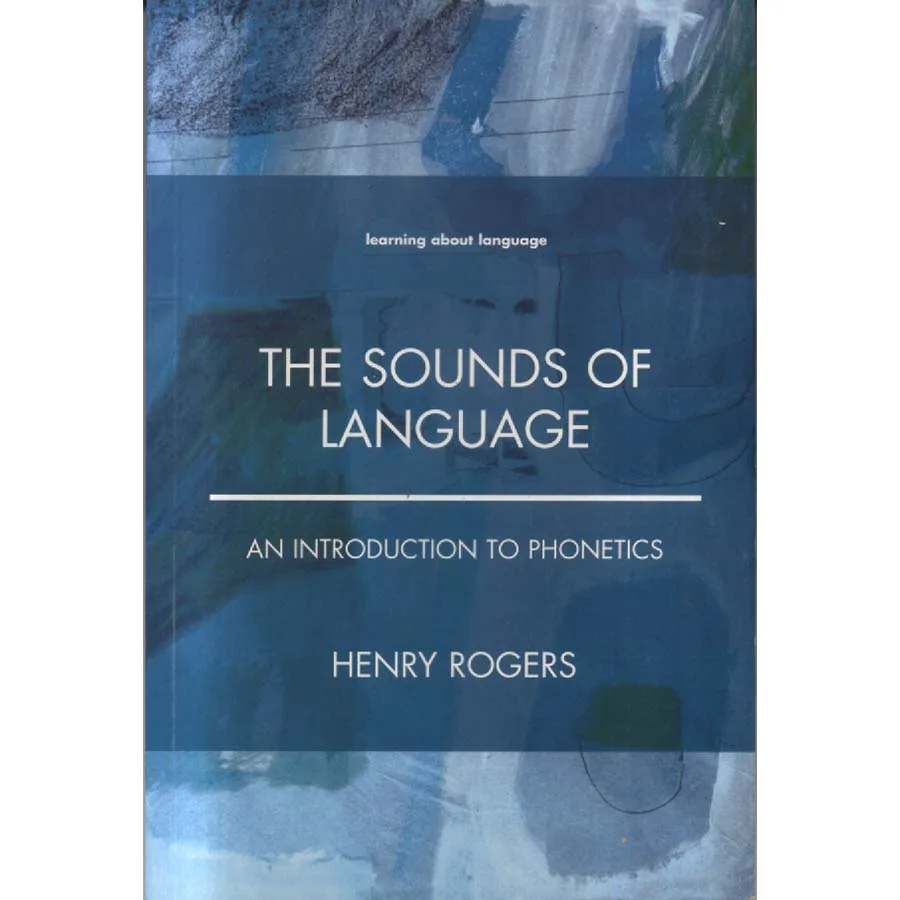
Publisher: Longman
Format: Paperback
ISBN: 9780582381827
Most of us spend our lives talking without giving the slightest thought to how we actually produce the extraordinary noises tumbling out of our mouths. We simply open them, emit a sequence of carefully coordinated grunts, whistles, clicks and vibrations, and somehow another human being responds by handing us a cup of tea, agreeing with us on social media, or asking us politely to keep the noise down. The Sounds of Language is the sort of book that peers behind this everyday miracle and says, "Right then, let’s see exactly what your tongue has been getting up to all these years."
Published by Longman in 2000, Henry Rogers’ An Introduction to Phonetics is a wonderfully accessible guide to one of the most fascinating corners of linguistics. This is not a book about grammar, spelling or whether it’s acceptable to end a sentence with a preposition. Instead, it ventures into the mechanics of speech itself, examining how humans produce sounds, why languages differ, and how an astonishing variety of consonants and vowels emerge from what is essentially a remarkably versatile arrangement of lungs, vocal cords, tongue, lips and the occasional enthusiastic puff of air.
The title is admirably understated. The Sounds of Language could almost be mistaken for a gentle meditation on birdsong or the pleasant murmur of conversation. In reality, it is an invitation into a world where speech is broken down with scientific precision into phonemes, fricatives, plosives, nasals and approximants. Suddenly, every word you utter becomes a carefully choreographed performance involving muscles you didn’t know you possessed and movements so precise that it seems extraordinary we manage to speak at all without tying our tongues into complicated knots.
One of the unexpected pleasures of phonetics is that it has a habit of making ordinary conversation feel faintly miraculous. After reading this book, you’ll never hear an accent quite the same way again. Regional dialects become fascinating systems rather than curious habits, children’s first words transform into tiny engineering triumphs, and you’ll find yourself quietly wondering whether that stranger on the train has just produced an unusually impressive alveolar trill. This may not make you more popular at dinner parties, but it will make you vastly more interesting to yourself.
Henry Rogers writes with the reassuring confidence of someone who knows that the International Phonetic Alphabet, despite its appearance, is not a secret code designed to keep ordinary people out of linguistics forever. Instead, he gently leads readers through concepts that initially seem daunting before revealing that human speech is both beautifully complex and surprisingly logical. It’s one of those rare textbooks that manages to educate without making you feel as though you’re being examined every third page.
This copy is in good condition, with the sort of honest signs of use one might expect from a book that has probably helped at least one bewildered student discover the difference between a voiced velar stop and something they had previously called "making a noise at the back of your throat." It remains clean, sound and perfectly ready to continue enlightening another curious reader.
As always, Crappy Old Books delights in finding books that reveal extraordinary complexity lurking beneath the most ordinary parts of everyday life. The Sounds of Language won’t necessarily improve your singing voice or settle long-running family arguments about how to pronounce "scone," but it will leave you with a profound respect for the astonishing machinery that allows humans to communicate using nothing more than carefully directed bursts of air. Once you’ve read it, you’ll never listen to conversation in quite the same way again—and you’ll probably become insufferably pleased whenever someone casually mentions a glottal stop.
Keep browsing: See more Academic books Other books by Henry Rogers
